Table of Contents
ALBANG is a custom window friction stay and restrictor manufacturer in China, based in Suzhou. We make custom 4-bar friction stays, opening restrictors, and related stay assemblies for aluminum and uPVC windows, working as an OEM/ODM supplier for hardware brands, window system manufacturers, distributors, and industrial buyers worldwide. Products are made to the buyer’s drawings, samples, or specifications.
Our factory covers product design, rapid prototyping, precision stamping, forming and bending, CNC machining, surface finishing, and assembly. Friction stays and restrictors are one product family within our aluminum and uPVC window and door hardware range. This page is an overview of the stay and restrictor families we manufacture. Model-level details are confirmed per project.
Friction Stay & Restrictor Types We Manufacture
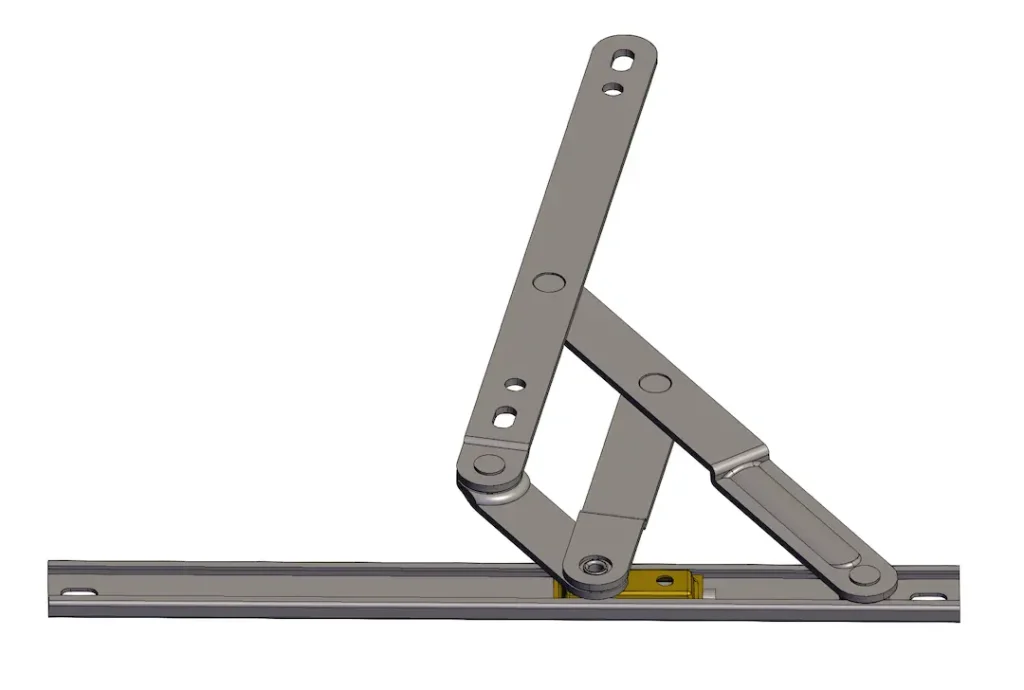
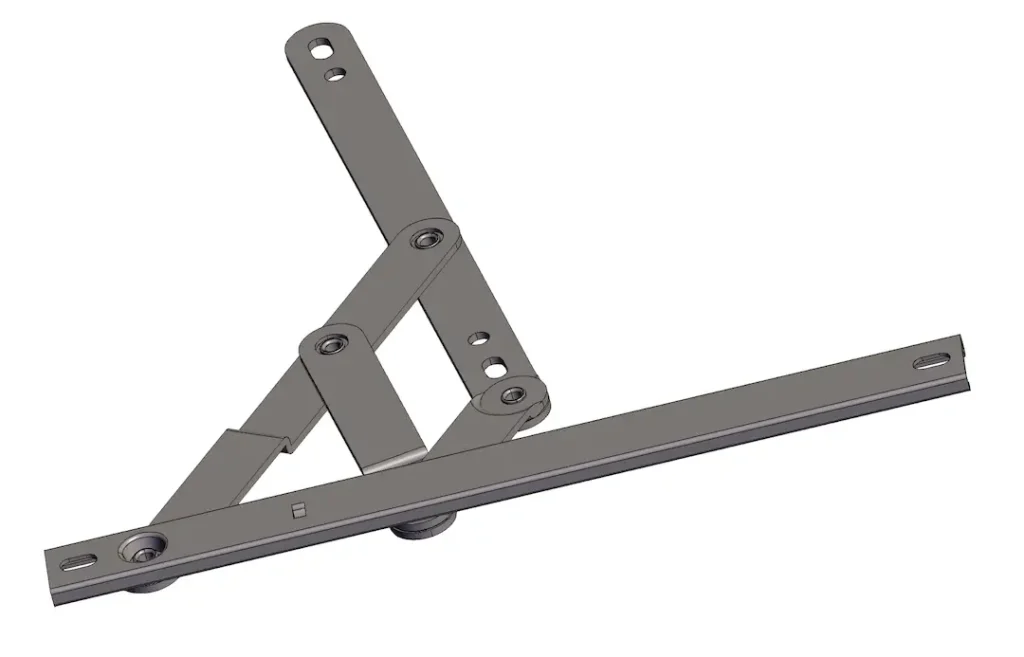
A friction stay supports the sash and holds it at the opening angle where it is set. A restrictor limits how far the sash can open. We manufacture both, each made to the customer’s profile dimensions and drawing. To review 4-bar stays, egress stays, and restrictors before sending an RFQ, view or download our window friction stay and restrictor catalog.
4-Bar Friction Stays (Side-Hung & Top-Hung)
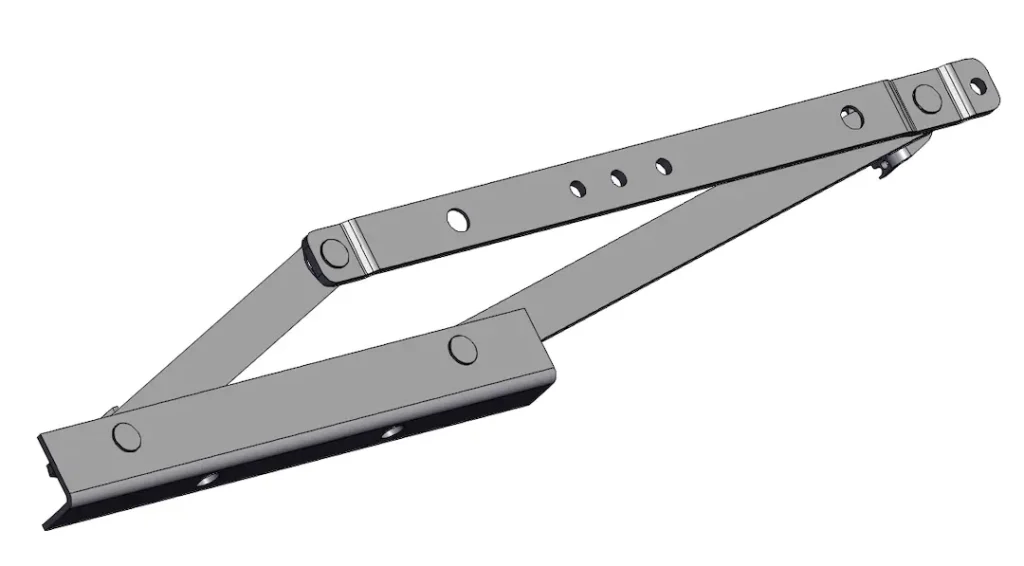
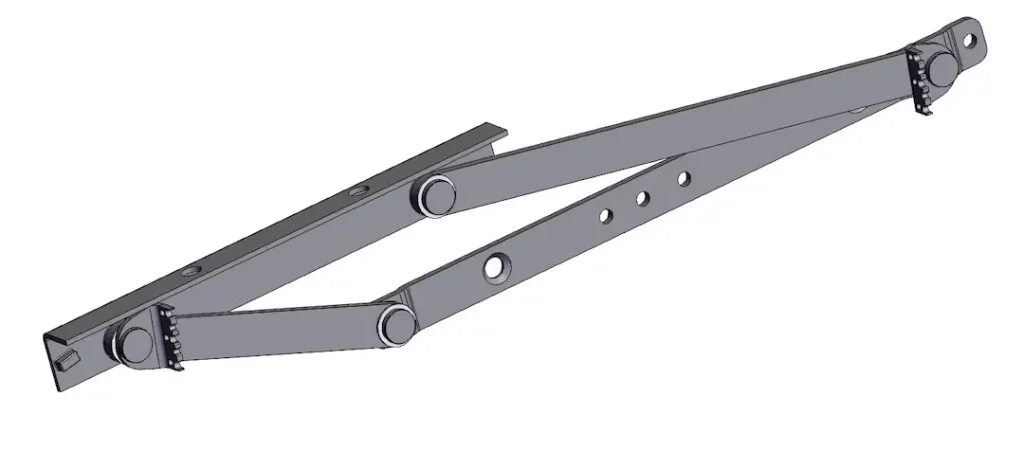
A 4-bar friction stay uses four pivoting arms and a track to guide the sash outward while friction holds the position. Side-hung versions carry a sash hinged at the side. Top-hung versions suit sashes hinged at the top. Arm length, track length, and pivot positions are made to the customer’s drawing.
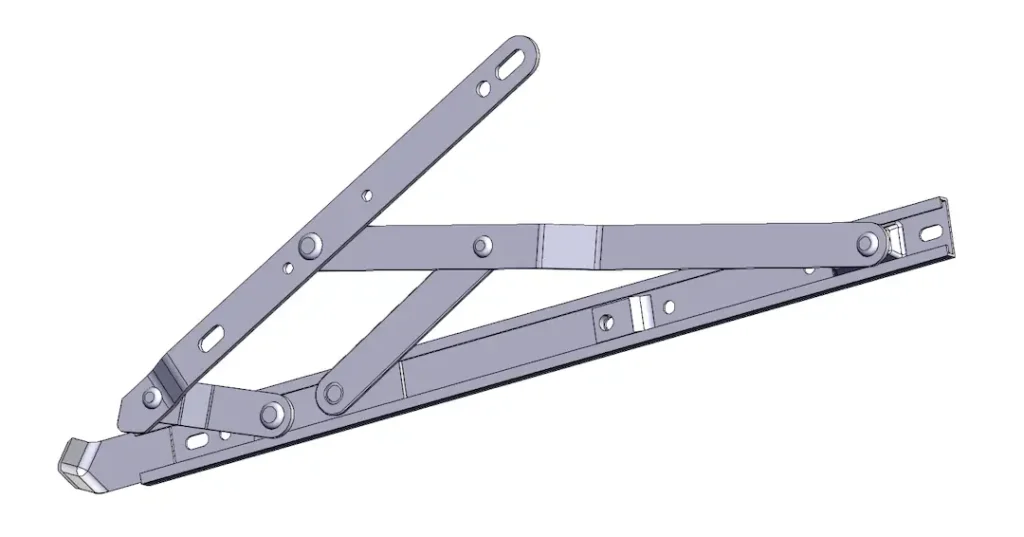
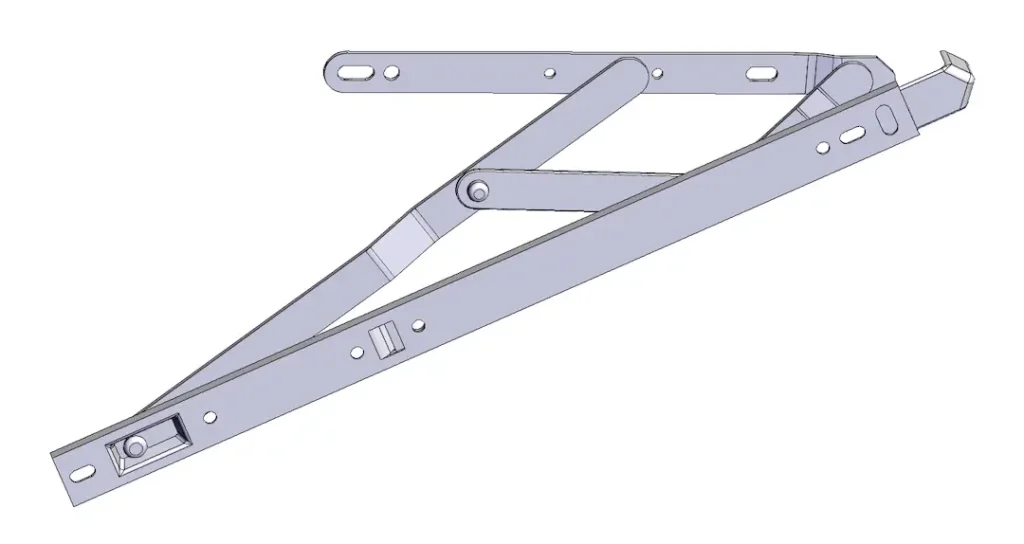
Egress / Easy-Clean Friction Stays
Egress and easy-clean stays are designed so the sash opens wider, leaving more clear opening between sash and frame. The geometry differs from standard stays, so we work from the buyer’s drawing and confirm movement on samples.
Cable Restrictors & Telescopic Restrictors
Cable restrictors use a cable to limit the opening distance. Telescopic restrictors use sliding sections to do the same. Both are fixed between sash and frame, and their length and fixing positions are made to the buyer’s requirement.
Child-Safety Restrictors
Child-safety restrictors limit the sash opening and are used on windows where a restricted opening is required. We manufacture them to the customer’s design, including any release mechanism. Compliance requirements are set by the buyer and the destination market.
Materials for Friction Stays & Restrictors
Material is chosen by the load a part carries, its exposure to moisture, and its finish. Final selection is confirmed during drawing review.
| Material | Typical Use | Common Processes |
|---|---|---|
| Stainless steel 304 / 316 | Arms, tracks, pins | Stamping, forming, CNC machining |
| Carbon steel | Formed brackets and plates | Stamping, forming, plating |
| Zinc alloy | Brackets, end caps, housings | Die casting, post-casting machining |
| Engineering plastics | Slide blocks, friction pads, guides | Selected per design |
Stainless Steel 304 / 316 Arms & Tracks
Stainless steel is the usual choice for arms and tracks because it resists moisture and holds its finish. Grade 316 is commonly considered where the buyer expects more corrosive conditions. Grade is confirmed per project, based on the buyer’s requirement.
Carbon Steel & Zinc Alloy Components
Carbon steel is used for formed brackets and plates and is finished for corrosion protection. Zinc alloy suits cast brackets and housings with complex shapes.
Engineering Plastics for Slide Blocks & Friction Pads
Plastic slide blocks and friction pads guide movement and help control friction at the joints. The plastic type is agreed with the buyer.
Manufacturing Processes
Stays are assembled from formed arms, machined or stamped details, and friction components. The process route is chosen by part shape and order volume.
Precision Stamping of Stainless Arms
Stamping cuts arms and plates from stainless sheet and strip with consistent geometry. This suits thin, flat parts at higher volumes. Tooling is developed to the drawing.
Forming & Bending of Tracks and Arms
Forming and bending shape tracks and arms into their final profiles. Bend positions and angles affect how the stay opens, so they are set to the drawing and checked on samples.
CNC Machining of Track & Slider Details
CNC milling, turning, drilling, and tapping create slider features, pin bores, and threaded holes. Deburring removes sharp edges before finishing.
Riveting & Friction-Pad Sub-Assembly
Arms are joined with rivets and fitted with friction pads and slide blocks. We check that the assembled stay moves smoothly and holds position as the drawing requires.
Surface Finishing & Corrosion Protection
Finish protects the stay from corrosion and affects appearance. Suitability depends on the base material.
Passivation of Stainless Steel
Passivation treats stainless steel surfaces after fabrication to support corrosion resistance. It is agreed with the buyer as part of the finish specification.
Electroplating of Carbon Steel Parts
Electroplating adds a protective surface layer to carbon steel parts. Finish requirements should be stated in the RFQ because they can affect tolerances at moving joints.
Load, Travel & Sizing Options
Stay size depends on the sash it carries and how far it must open.
Sash Weight & Opening Angle Considerations
Sash weight, sash height, and the required opening angle determine arm length, track length, and friction setting. Please give these values in the RFQ. We do not state load ratings until they are confirmed for a project.
Standard Lengths & Custom Sizing to Drawings
We make stays to the buyer’s drawing, including custom lengths and mounting hole patterns. Where a buyer wants to match an existing stay, a sample lets us measure and prepare a 3D model for approval.
Custom Design, DFM & OEM/ODM Production
We support made-to-drawing OEM production and ODM development. Starting points can be drawings, 3D CAD files, photos, or physical samples. Customization commonly covers dimensions, mounting interfaces, materials, finishes, and branding.
Made-to-Drawing & Sample-Based Development
Our engineers review the stay design for manufacturability. We give DFM feedback on material thickness, bend details, tolerances, and finish suitability before tooling is made.
Prototyping & Tooling
A typical path runs from drawing review through 3D printing and prototypes to tooling and sample production. The buyer approves a sample before volume production. Tooling cost, quantities, and lead time are confirmed per project.
Applications & Compatibility
A stay must suit the profile it is fixed to and the sash it supports. We review profile and sash details before quoting.
Aluminum Casement & Awning Windows
Aluminum casement and awning windows use stays for support and controlled opening. Track and arm dimensions are matched to the profile groove and sash size. Sliding windows use a different mechanism, covered in our window and door rollers.
uPVC Casement & Tilt-and-Turn Windows
uPVC profiles often include steel reinforcement, so fixing positions and screw types are agreed with the buyer. Stay geometry is made to the customer’s mounting drawing.
Compatibility with Hinges, Handles & Locking Systems
Stays work alongside other hardware. We do not assume universal compatibility. Interfaces are verified against the buyer’s drawings or samples. See our window and door hinges and locking systems for related hardware.
Quality Control & Export Packaging
Quality control checks that stays match the drawing and work as intended.
Dimensional Inspection & Function Test
We inspect critical dimensions such as arm length, track length, and hole positions. Fit is verified against samples or mating parts. Inspection methods and acceptance criteria are agreed with the buyer at sample approval.
Friction & Opening Cycle Checks
Functional checks cover smooth movement, position holding, and production consistency across batches. Test requirements such as cycle or salt-spray testing are defined by the buyer and confirmed before production. See our quality control process.
Export Packaging
Packaging is arranged per order to protect finishes and keep stays sorted by model, length, and finish.
FAQ
What is the difference between a friction stay and a window restrictor?
A friction stay supports the sash and holds it at the opening angle where it is set. A restrictor only limits how far the sash can travel. Some windows use both: a stay for support and a separate cable or telescopic restrictor for a fixed opening limit. We manufacture each to the buyer’s drawing.
What is stack height, and why does it matter on aluminum and uPVC profiles?
Stack height is the folded thickness of the stay when the arms are fully closed. It must fit the profile cavity or rebate. Common buyer-specified heights include 13 mm and 17 mm, but we make the stack height to the drawing rather than assuming a standard.
What is the difference between an egress stay and an easy-clean stay?
An egress stay is designed so the sash opens farther from the frame, leaving a wider clear opening. An easy-clean stay lets the sash move to a position that gives access to the outer glass from inside. Geometry differs from a standard 4-bar stay, so we confirm the opening path on a sample.
Can friction be adjusted after assembly, or is it set during manufacture?
Either approach is possible. Some designs include an adjustment screw; others set friction at assembly with pads and rivet tightness. The method follows the buyer’s drawing, and holding force is checked on the approved sample.
Are friction stays handed for left- and right-opening sashes?
Many egress, easy-clean, and restricted stays are handed. Side-hung and top-hung handing should be marked on the drawing or sample. We manufacture left-hand and right-hand versions when the design requires them.
Request an OEM/ODM Friction Stay & Restrictor Quotation
To start a manufacturing feasibility review for your custom friction stay or restrictor project, send your inquiry through our contact page. Where applicable, include:
- Product drawings, 3D CAD files, photos, or physical samples
- Stay or restrictor type and intended window application
- Aluminum or uPVC profile details and mounting dimensions
- Sash weight, opening angle, and functional requirements
- Preferred materials, finishes, and performance requirements
- Estimated order quantities, packaging needs, and destination market
Our engineering team will review your specifications, advise on manufacturability, and provide a quotation.