Albang Hardware manufactures aluminum alloy door and window rubber seal strips for B2B buyers who need custom profiles, stable quality, and export-ready QA. Our rubber sealing profiles are used in aluminum windows, aluminum doors, curtain walls, glazing systems, sliding doors, balcony doors, patio doors, and commercial building openings.
We focus on practical sealing performance: correct fit, reliable compression, long-term elasticity, weather resistance, and consistent batch quality.
Table of Contents
Rubber Seal Strips for Aluminum Doors and Windows
Aluminum alloy doors and windows need sealing strips that match the frame structure, groove size, glass thickness, and opening method. A poorly matched seal may cause air leakage, water penetration, dust entry, outside noise, difficulty closing, or early deformation.
As a China-based manufacturer, Albang Hardware supplies aluminum window rubber seal strips, aluminum door rubber gaskets, aluminum profile sealing strips, glazing rubber seal strips, and curtain wall rubber gasket products for OEM/ODM projects, architectural systems, distributors, and façade contractors.
Our products belong to the broader category of Custom Seals & Gaskets, with a strong focus on architectural door, window, and façade sealing applications.
Designed for Aluminum Window and Door Systems
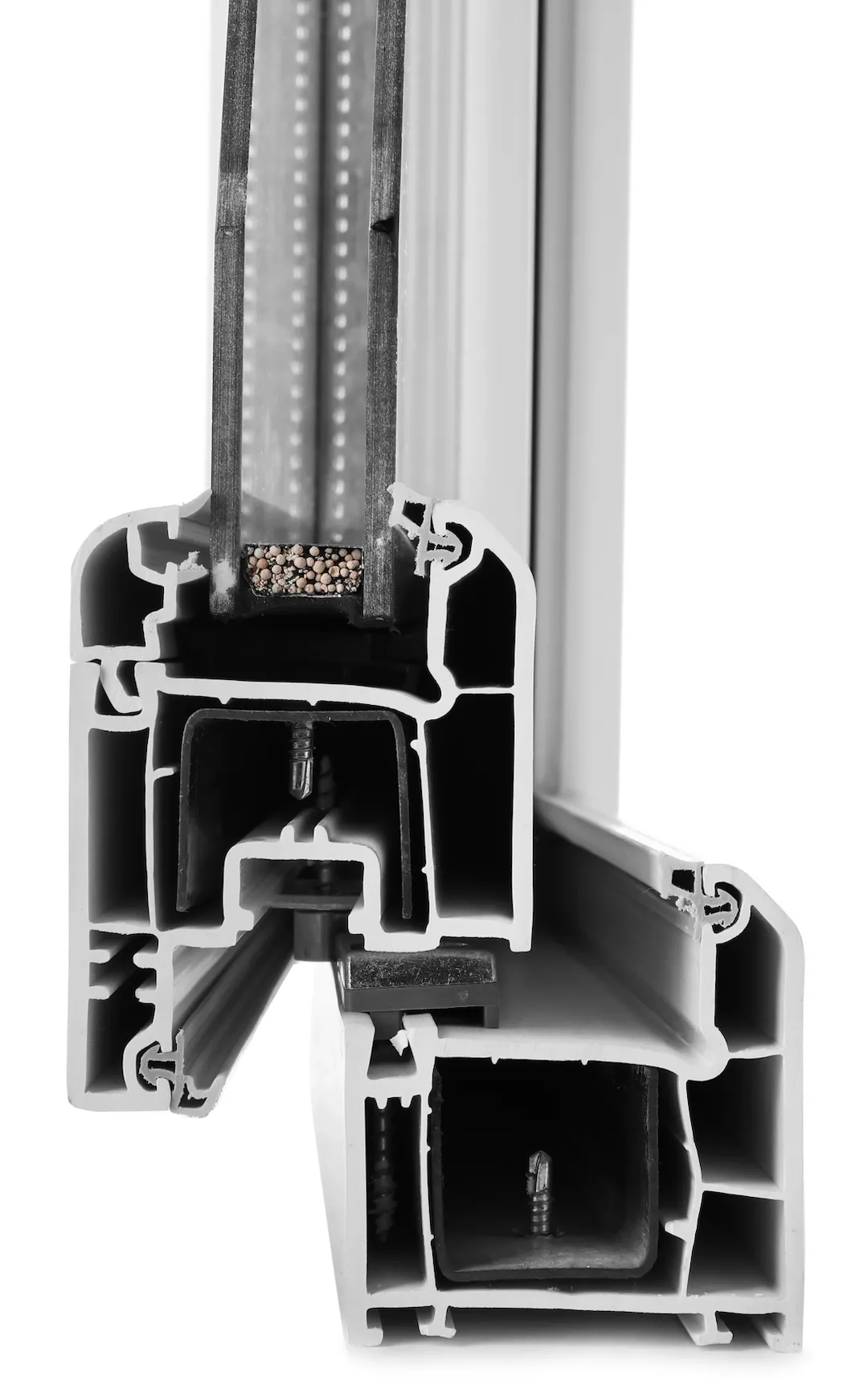
An aluminum window rubber seal strip is not only a simple rubber profile. It must lock into the aluminum groove, compress under closing pressure, recover after repeated use, and maintain contact during long-term service.
Common applications include:
- Casement windows
- Sliding windows
- Tilt and turn windows
- Awning windows
- Fixed windows
- Hinged aluminum doors
- Sliding aluminum doors
- Folding doors
- Balcony doors
- Patio doors
- Commercial entrance systems
For aluminum door rubber seal strip projects, we review the profile drawing, installation position, compression gap, target hardness, material requirement, and service environment before production.
Suitable for Residential, Commercial, and Façade Projects
Aluminum frame rubber gasket products are widely used in apartments, villas, hotels, offices, schools, hospitals, shopping malls, factories, modular buildings, and curtain wall projects.
For residential systems, buyers usually focus on smooth closing, waterproof performance, noise reduction, and comfort. For commercial systems, batch consistency, installation efficiency, and aging resistance are more important. For curtain wall systems, dimensional accuracy, compression recovery, weather resistance, and compatibility with aluminum and glass are critical.
For building envelope applications, Albang Hardware also supports related Architectural Rubber Seal products for aluminum frames, glass systems, and façade structures.
Materials for Door and Window Rubber Seal Strips
Material selection affects weather resistance, flexibility, compression set, temperature performance, service life, and cost. Albang Hardware can manufacture rubber seal strips according to your drawing, sample, or project specification.
EPDM Rubber Seal Strip
EPDM is one of the most common materials for aluminum alloy doors and windows. EPDM window seal strip products provide good resistance to outdoor weathering, ozone, UV exposure, and general aging.
EPDM rubber seal strip for aluminum windows is commonly used for:
- Exterior aluminum windows
- Aluminum doors
- Balcony doors
- Patio doors
- Curtain wall rubber gasket systems
- Glazing rubber seal applications
- Commercial building openings
For most outdoor aluminum frame rubber seal projects, EPDM is a preferred material because it offers a practical balance of performance, durability, and cost.
Silicone Rubber Seal Strip
Silicone rubber seal strip is used when the project requires better high and low temperature flexibility, soft contact, or special color appearance. It is often selected for high-end glazing systems, façade sealing, or special architectural applications.
Compared with EPDM, silicone usually has a higher cost range, but it can provide excellent flexibility under temperature changes. For projects where temperature resistance, soft sealing, or appearance is more important than low cost, silicone can be a suitable option.
TPE / TPV Seal Strip
TPE and TPV sealing strips are thermoplastic elastomer options. They can provide stable processing, good shape control, and recyclability advantages for selected applications.
TPE sealing strip and TPV rubber seal products may be suitable for indoor, semi-outdoor, or cost-sensitive aluminum profile sealing projects, depending on the required performance level.
PVC Window Seal Strip
PVC window seal strip is a lower-cost option for selected indoor or economy applications. It is easy to extrude and can provide stable shape control, but it is usually not recommended for demanding outdoor aluminum door and window systems.
For premium exterior windows, doors, and curtain wall applications, EPDM or silicone is normally more suitable. For less demanding applications, PVC may be considered based on cost target and service conditions.
Common Rubber Seal Strip Types
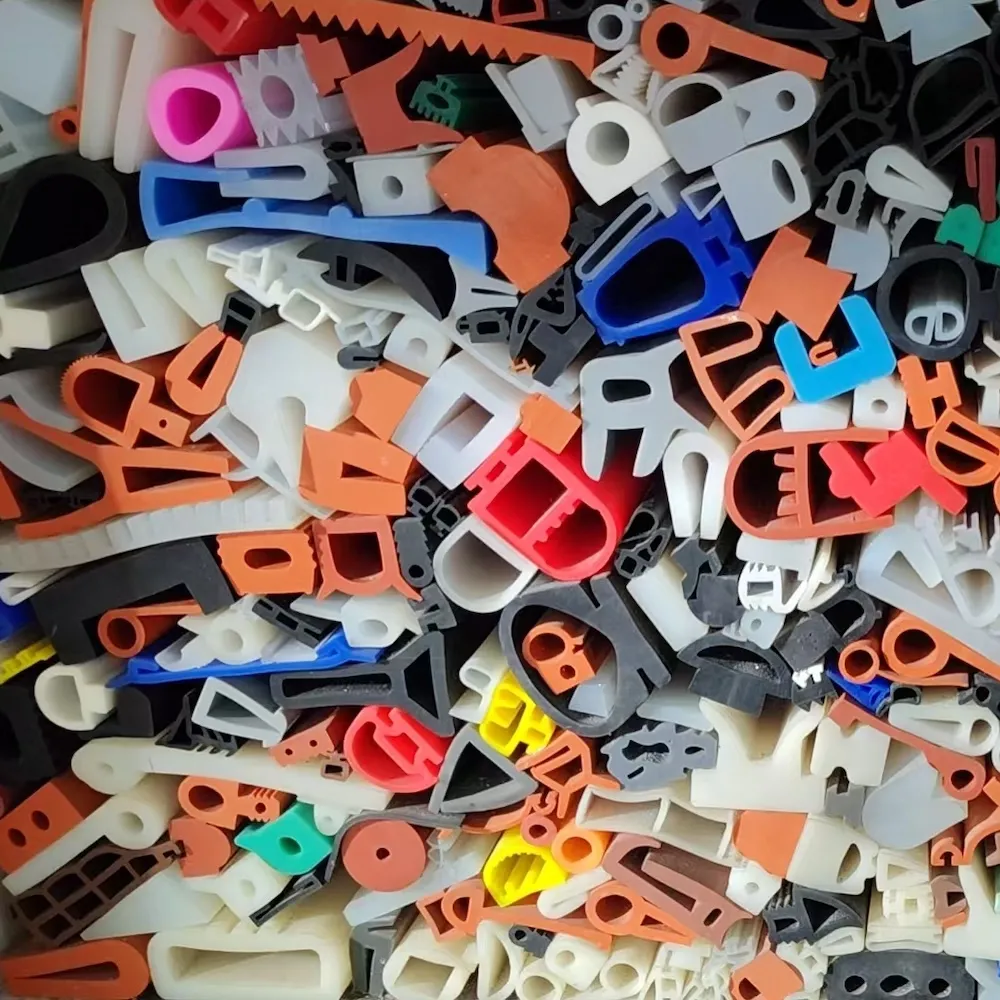
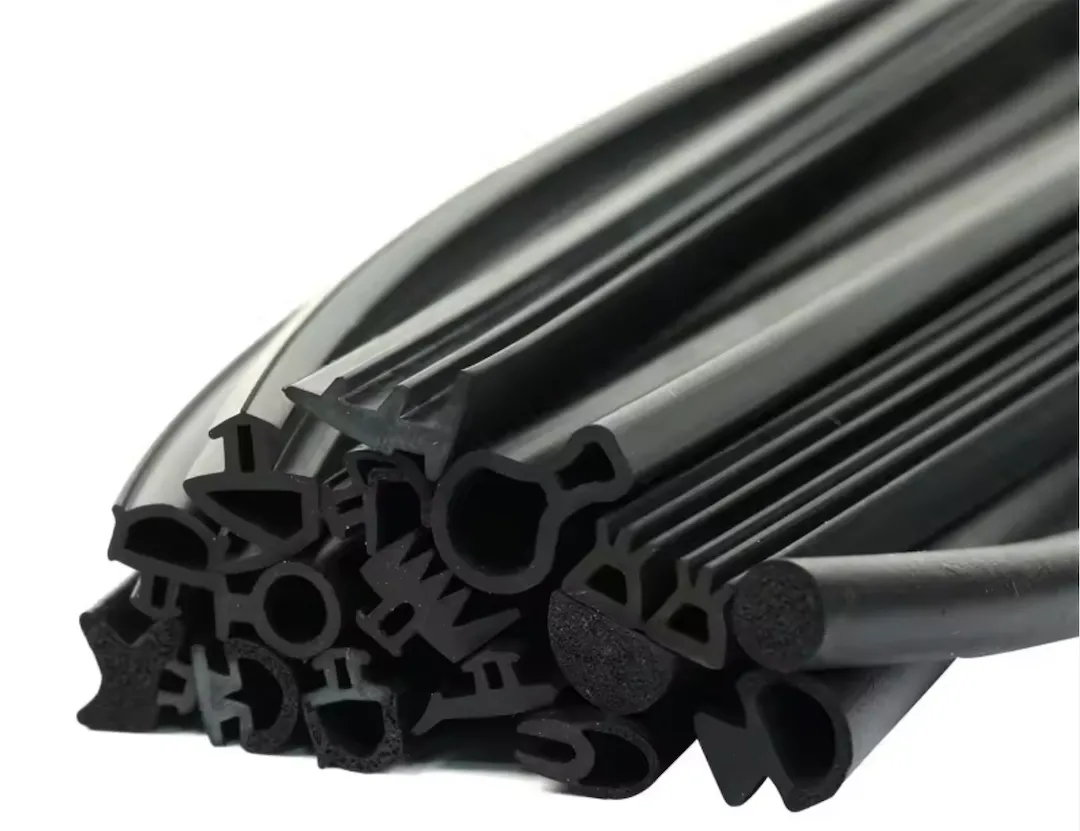
A door and window rubber seal strip can be designed as a solid, hollow, sponge, flocked, or co-extruded profile. The correct structure depends on the installation position and sealing function.
Hollow Rubber Seal Strip
A hollow rubber seal strip includes one or more internal air chambers. This design improves compression, rebound, cushioning, and sealing contact. It is widely used for door and window closing gaps.
Common benefits include:
- Better compression recovery
- Lower closing force
- Improved air sealing
- Improved water resistance
- Better cushioning during closing
- Better noise reduction support
Hollow profiles are common in aluminum door seals, aluminum window seals, and weather seal systems.
Solid Rubber Gasket
A solid rubber gasket is made from dense rubber without internal hollow chambers. It is suitable for stable contact areas, glass holding positions, compression seals, and structural sealing points.
Solid profiles are often used where the buyer needs firmer support, clean installation, and consistent contact pressure.
Sponge Rubber Seal
Sponge rubber seal profiles are softer and more compressible. They are useful for uneven gaps, low-pressure sealing, cushioning, and applications requiring reduced closing force.
For aluminum doors and windows with tolerance variation, sponge rubber can help improve sealing contact without making the system too hard to close.
Flocked Rubber Seal Strip
A flocked rubber seal strip has a low-friction surface layer. It is commonly used in sliding doors and sliding windows where smooth movement, lower noise, and surface protection are important.
Flocked surfaces can reduce friction between moving parts and improve the user experience in aluminum sliding systems.
Co-Extruded Rubber Seal Strip
A co-extruded rubber seal strip combines different hardness zones or material structures into one profile. For example, a harder base can improve groove retention, while a softer sealing lip improves compression contact.
Common combinations include:
- Dense rubber with sponge rubber
- Hard base with soft sealing lip
- EPDM with special surface layer
- Rubber profile with metal insert
- Colored surface with black base
Co-extrusion is suitable for complex aluminum profile rubber seal designs that require both strong installation and flexible sealing.
Applications in Aluminum Door and Window Systems
A rubber weatherstrip for aluminum doors or windows can be installed in different locations. Each position has different performance requirements.
Aluminum Window Seal
An aluminum window seal strip is installed around the frame, sash, and opening gap. It helps reduce air leakage, rainwater penetration, dust entry, and outside noise.
For thermal break aluminum windows, a stable rubber seal also supports the overall energy performance of the system by reducing uncontrolled air movement.
Aluminum Door Seal
An aluminum door rubber gasket is used on side gaps, top gaps, bottom gaps, frame contact areas, and closing lines.
For balcony doors, patio doors, and commercial entrance doors, the seal must resist repeated opening and closing while maintaining compression recovery.
Glazing Rubber Seal
A glazing rubber seal strip is installed between glass and aluminum profiles. It helps hold, protect, and seal the glass panel.
Typical glass applications include:
- Single glass
- Double glazing
- Insulated glass units
- Laminated glass
- Tempered glass
- Curtain wall glass panels
The profile must match the glass thickness, groove size, installation method, and compression requirement.
Curtain Wall Rubber Gasket
Curtain wall rubber gasket products are used in glass façades, aluminum curtain wall systems, and commercial building envelopes. These profiles require stable dimensions, outdoor aging resistance, and compatibility with glass and aluminum surfaces.
For façade-related applications, Albang Hardware also supports Rubber Seal for Architectural Facade products for building envelope projects.
Sliding Door and Window Seal
Sliding systems often require flocked seals, soft rubber profiles, or low-friction sealing designs. The seal must allow smooth movement while still limiting air, dust, water, and noise entry.
For long sliding doors, profile stability is important because soft or poorly designed seals may deform during installation or use.
Key Performance Requirements
Good sealing performance depends on material formula, profile geometry, extrusion accuracy, curing quality, and fit-up testing. A material name alone is not enough.
Air Sealing and Water Resistance
Air sealing depends on correct compression, continuous contact, and accurate profile design. Water resistance depends on sealing pressure, drainage compatibility, corner sealing, and the installation condition.
For exterior aluminum windows and doors, the rubber seal should work together with the drainage design. It should seal the required area without blocking designed water channels.
UV, Ozone, and Weather Resistance
Outdoor rubber seals face sunlight, ozone, rain, wind, dust, heat, and cold. UV-resistant EPDM seal products are commonly used for aluminum windows and doors because EPDM performs well in outdoor environments.
For long-term architectural projects, buyers should confirm material grade, hardness, aging resistance, and test requirements before mass production.
Compression Recovery and Long-Term Elasticity
Compression set is one of the most important properties for aluminum door and window rubber seal strip performance. If the seal cannot recover after long-term compression, air leakage and water leakage may appear.
Good compression recovery supports:
- Long-term sealing
- Stable closing force
- Reduced permanent deformation
- Better service life
- Better user experience
Noise Reduction and Dust Prevention
A noise reduction window seal works by reducing open gaps and vibration paths. An anti-dust door seal strip limits fine particles entering through frame openings.
For buildings near roads, industrial areas, coastal wind, or dusty environments, multi-point sealing and correct compression are especially important.
Temperature Resistance
Temperature changes can affect hardness, flexibility, and sealing contact. Cold weather may make some materials harder, while high heat may accelerate aging or deformation.
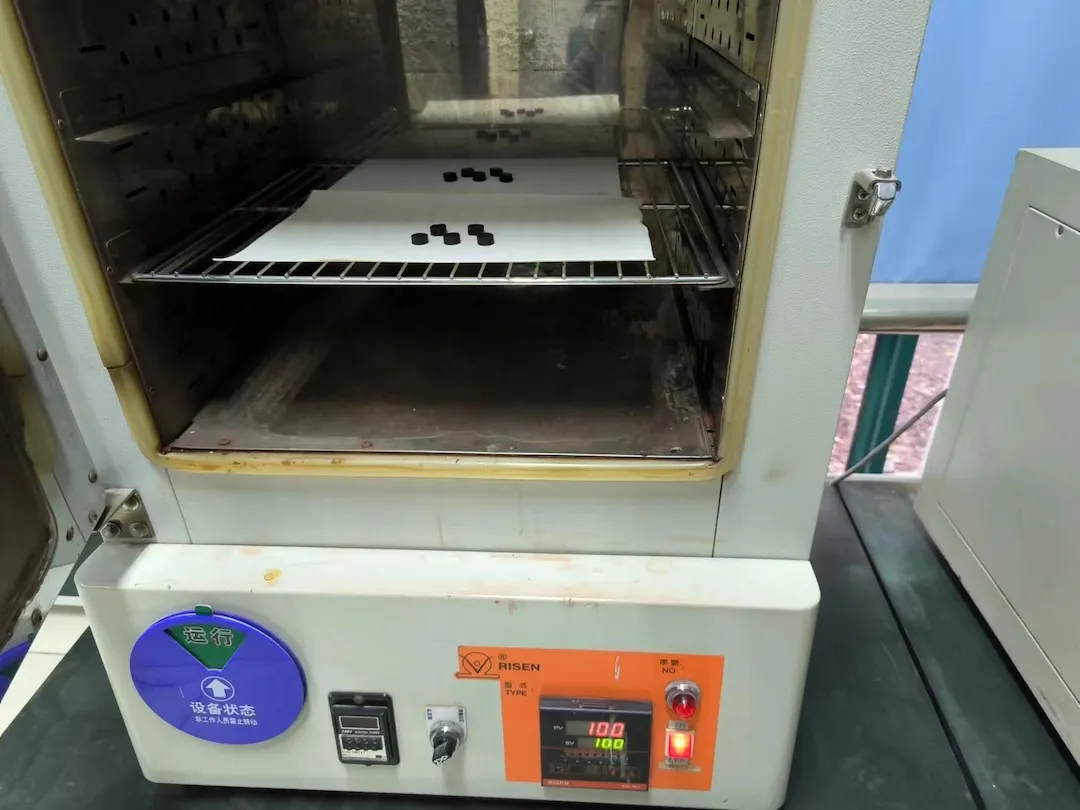
For projects in hot, cold, or high-altitude regions, buyers may require additional testing. Albang Hardware can discuss requirements related to High and Low-Temperature Testing for Rubber Sealing Strips when climate performance is important.
Custom Rubber Seal Strip Manufacturing
Albang Hardware supports OEM and custom rubber extrusion projects based on drawings, samples, aluminum groove dimensions, or application requirements.
Custom Profile by Drawing or Sample
For custom rubber seal strip manufacturer projects, buyers can provide:
- 2D drawing
- 3D file
- Physical sample
- Aluminum profile section
- Groove size
- Glass thickness
- Compression gap
- Target hardness
- Material requirement
- Color requirement
- Annual quantity
If an existing seal has leakage, loose installation, difficult closing, or aging problems, we can review the profile structure and suggest improvement directions.
Mold Development and Trial Samples
Custom profiles usually require extrusion die development. After tooling, we produce trial samples for dimension checking, installation testing, and buyer approval.
The project flow is usually:
Profile drawing → extrusion die → trial sample → fit-up test → approval → mass production
Mold cost depends on profile size, profile complexity, tolerance, material, and structure. For repeat orders, custom tooling can improve fit, consistency, and production efficiency.
Color, Hardness, and Packaging Options
Common customization options include:
- Black, grey, white, brown, or custom color
- Shore A hardness range by application
- Dense, sponge, hollow, or co-extruded structure
- Coil length or cut-to-length supply
- Carton, bag, reel, or pallet packaging
- Private label packaging
- Barcode or batch label support
For wholesale window rubber seal strip buyers, packaging and labeling are important for warehouse control, resale, and installation management.
OEM / ODM Support
For OEM and ODM sourcing teams, we can support profile matching, custom material selection, private label packaging, export documentation, and repeat-order batch control.
This helps buyers reduce sourcing risk and keep the sealing profile consistent across multiple production batches.
Quality Control for Rubber Seal Strips
Export buyers need more than a good sample. They need repeatable quality, batch control, inspection records, and stable production.
Dimensional Inspection
We check key dimensions against the approved drawing or sample, including width, height, installation foot, lip thickness, hollow chamber shape, and profile tolerance.
For push-in and clip-in seal designs, the foot structure is critical. If the foot is too small, the seal may loosen. If it is too large, installation becomes difficult.
Hardness and Physical Testing
Common checks may include Shore A hardness, tensile strength, elongation, density, and appearance inspection.
Hardness affects closing force, installation feel, and sealing pressure. A seal that is too hard may make the window or door difficult to close. A seal that is too soft may not provide enough contact pressure.
Aging and Compression Set Testing
For outdoor architectural projects, aging resistance and compression set are important. These tests help evaluate whether the rubber profile can maintain sealing performance after long-term use.
Depending on the buyer’s requirement, testing can be discussed for material comparison, project approval, or quality documentation.
Appearance Inspection
Appearance inspection checks surface quality, color consistency, deformation, cracks, bubbles, contamination, and visible defects.
For glazing rubber seal and façade rubber seal products, a clean appearance is important because some areas may be visible after installation.
Fit-Up Test with Aluminum Profiles
Fit-up testing checks whether the rubber seal can be installed correctly into the aluminum groove and whether the sealing lip compresses as expected.
This step is especially important for custom aluminum window seal strip, curtain wall rubber gasket, aluminum door rubber gasket, and glazing
rubber seal strip projects.
How to Choose the Right Seal Strip
Choosing the right aluminum frame rubber seal requires both product understanding and system thinking.
Confirm Aluminum Groove Size
The groove size controls the installation foot and retention force. Even a small mismatch may cause loose installation, difficult assembly, or unstable sealing.
Buyers should provide the aluminum profile drawing or physical sample whenever possible.
Confirm Application Position
A frame seal, sash seal, glazing gasket, sliding seal, and door bottom seal all have different requirements. The seal position affects profile shape, hardness, material, and compression design.
Confirm Material and Hardness
For outdoor aluminum windows and doors, EPDM is commonly recommended. For special temperature or appearance needs, silicone may be selected. For cost-sensitive or indoor applications, TPE, TPV, or PVC may be considered.
Confirm Exposure and Testing Requirements
Coastal areas, cold regions, high-temperature climates, and commercial façades may require higher performance. Buyers should confirm UV resistance, ozone resistance, temperature range, compression set, and environmental compliance requirements.
Confirm Installation Method
Common installation methods include push-in, clip-in, adhesive-backed, and glazing gasket installation. The installation method affects the profile base, locking foot, and tolerance design.
Price Factors for Aluminum Door and Window Rubber Seal Strip
We avoid fixed absolute pricing because the rubber seal strip price depends on multiple cost drivers.
Main price factors include:
- Material type
- Rubber formula
- Profile weight per meter
- Profile complexity
- Tolerance requirement
- Hardness range
- Color requirement
- Mold development
- Order quantity
- Packaging method
- Testing requirement
- Export documentation
For wholesale and OEM buyers, larger quantities usually help reduce unit cost. For custom profiles, tooling cost and sample approval should be included in the total project budget.
Albang Hardware supports buyers looking for stable China factory supply, competitive price ranges, and practical custom service instead of only searching for the cheapest option.
Information Needed for Quotation
To quote accurately, please provide:
- Product drawing or sample photo
- Material requirements, such as EPDM, silicone, TPE, TPV, or PVC
- Profile dimensions
- Shore A hardness requirement
- Color
- Application position
- Aluminum groove size
- Glass thickness if applicable
- Annual or batch quantity
- Packaging requirement
- Destination country
- Testing or compliance requirements
With complete information, we can review manufacturability, suggest suitable material options, estimate tooling needs, and provide a more reliable quotation.
FAQ
What material is best for aluminum window seal strips?
EPDM is commonly used for exterior aluminum window rubber seal strip applications because it offers good weather resistance, UV resistance, and ozone resistance. Silicone can be used for special temperature or high-end glazing applications.
Can rubber seal strips be customized by drawing?
Yes. Albang Hardware can manufacture custom rubber extrusion profiles based on drawings, samples, aluminum groove dimensions, or application requirements.
What is the difference between EPDM and silicone seal strips?
EPDM is widely used for outdoor architectural sealing because of its weather resistance and cost-performance balance. Silicone offers excellent temperature flexibility and can be used for special applications, but it usually costs more.
How do I confirm the correct rubber seal profile?
The best method is to provide the aluminum profile drawing, groove size, glass thickness, installation position, and target compression gap. A physical sample is also helpful for reverse checking.
What information is needed for a custom quotation?
Please send the profile drawing or sample, material, hardness, color, dimensions, quantity, packaging requirement, destination country, and any testing or compliance standards.
Why Choose Albang Hardware
Albang Hardware supports B2B buyers who need aluminum alloy door and window rubber seal strips with custom profile options, stable quality control, and export-ready documentation.
We help procurement managers reduce sourcing risk, support engineers with profile matching, assist quality managers with inspection requirements, and serve OEM/ODM teams with custom production.
For aluminum door seals, aluminum window seals, glazing rubber gaskets, curtain wall rubber gaskets, and architectural sealing profiles, Albang Hardware can be your long-term China rubber seal strip supplier.